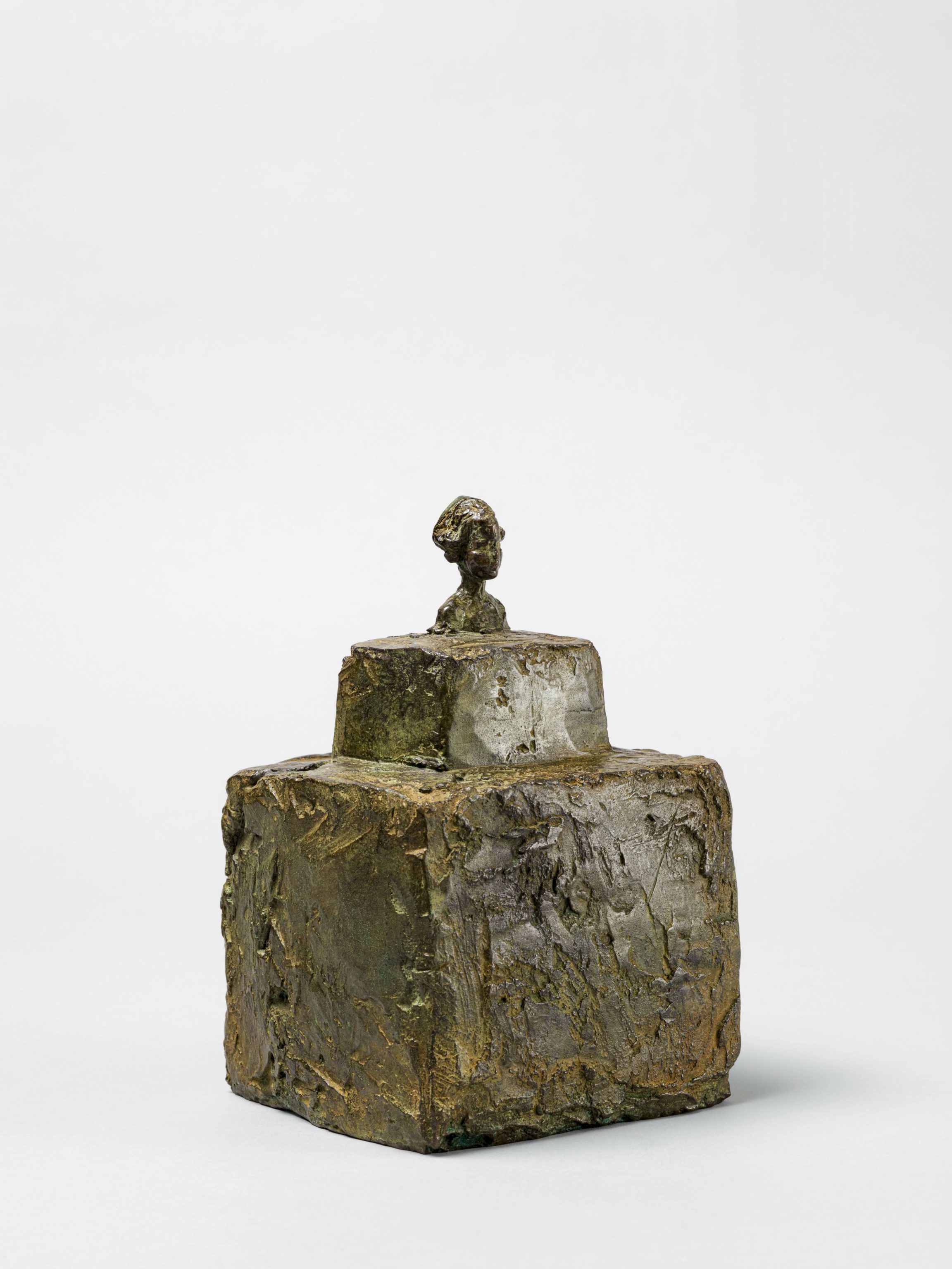
Alberto Giacometti and the base
Simple or tiered, stone slab or column, too small at first glance or apparently out of proportion, the pedestal or base plays a major role in Alberto Giacometti’s sculpture. The public is invited to follow the artist and his thinking throughout his career as he explored this sculptural element. The pedestal is no accessory but rather lies at the heart of Giacometti’s experiments in creating a space that was well suited to the manifestation of the human figure.
The MCBA collections recently grew to include 17 sculptures by Alberto Giacometti, representing a long-term loan that a private collection has generously placed in the museum. The show draws on this rich body of work to take us into the heart of the creative output of a major actor on the 20th-century art scene.
By tackling the question of the pedestal and viewing it as one of the major challenges of modern figurative sculpture, Giacometti was assuming the mantle of an Auguste Rodin or an Antoine Bourdelle and their particular concerns. As Giacometti asserted around 1949, ‘Space does not exist, we have to create it.’ Intent on accurately rendering the perception of a figure at a certain distance, the sculptor would use the pedestal or base to locate the figure in a particular spatial field and establish its scale. The base is not separate but rather forms an integral component of the work of art. It defines the distance, height, and viewing conditions from which the sculpture must be perceived.
Beyond these formal considerations, however, the pedestal was a response to existential questions. Giacometti’s figures are paradoxically both solidly grounded and clearly vulnerable. Standing atop bases that are often massive, they are sometimes tilted as well and are kept in a form of balance in which stability and uncertainty remain in tension. The pedestal has then a part to play in expressing the deep ambition haunting the work, namely to lend form to the materiality of bodies as well as the visual and sensual experience of their presence in the world.
Exhibition curator: Camille Lévêque-Claudet, curator ancient and modern art, MCBA
Alberto Giacometti, "Petit buste de Silvio sur double socle", 1943 – 1944. Bronze, 18,2 × 12,8 × 11,7 cm. Musée cantonal des Beaux-Arts, Lausanne. Long-term loan from a private collection, 2025 © Succession Alberto Giacometti / 2026, ProLitteris, Zurich Photo: MCBA